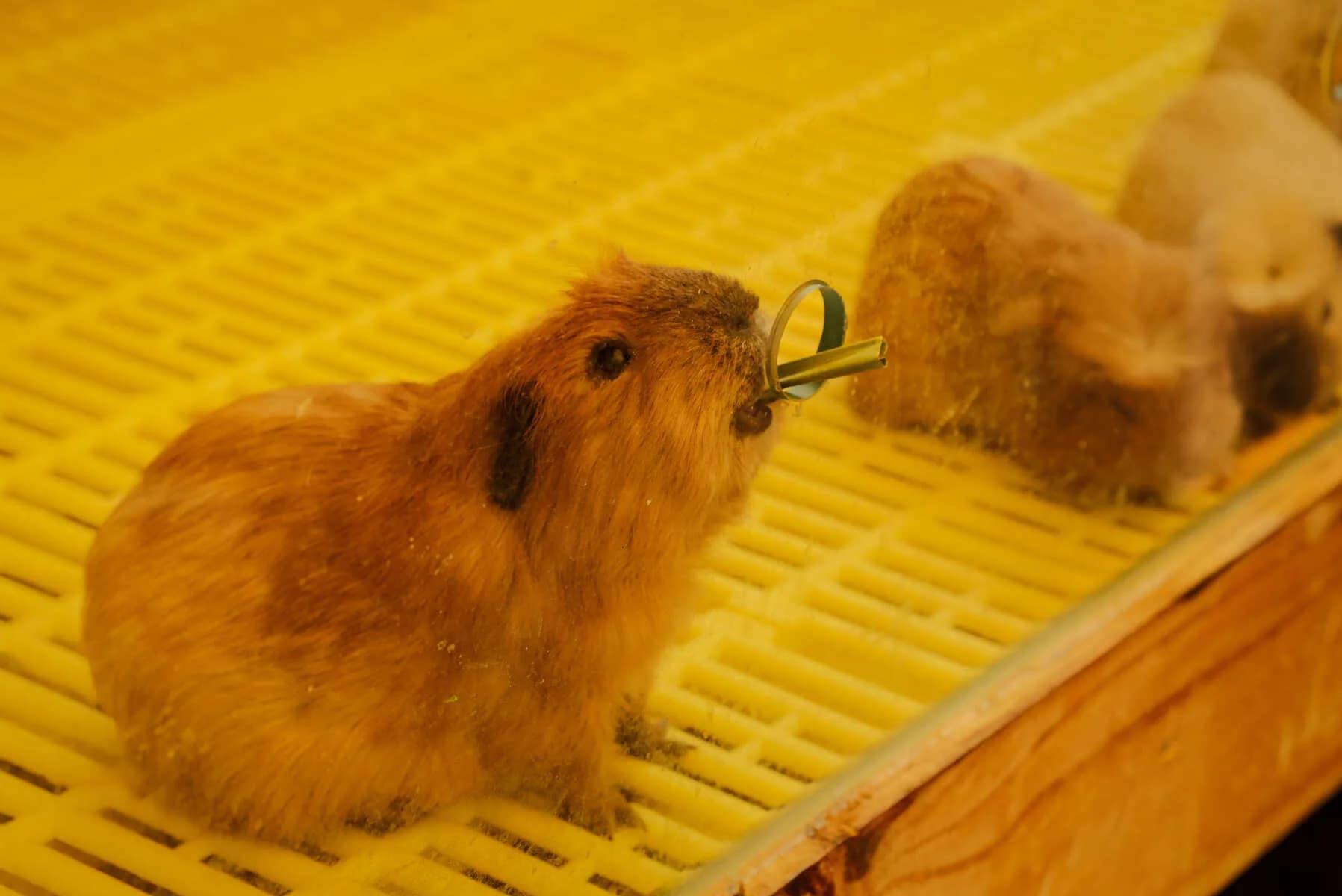
Guinea Pig
Cavia porcellus
Round, tail-less little fluffballs that squeal “wheek wheek” whenever they hear a bag of veggies rustle.
- Size
- 20–25 cm long, 0.7–1.2 kg
- Lifespan
- 5–7 years
- Diet
- Hay, grass, leafy greens, bell pepper
Origin & range
Guinea pigs come from the Andes of South America (Peru, Bolivia and Ecuador), where local people domesticated them around 7,000 years ago. Domestic guinea pigs no longer live in the wild, though their wild relatives still roam South American grasslands and mountains.
What they’re like
Round body, short legs and no tail. They have four toes on the front feet and only three on the back. Coats come short and smooth, in swirly rosettes or long and flowing.
Their teeth never stop growing, so they chew hay all day to keep them worn down.
Behaviour
Guinea pigs live in groups and need company; alone they get lonely. They chatter all day: a loud “wheek” when they want food, a low purr when relaxed, and teeth-chattering when annoyed.
A happy guinea pig hops straight up in the air, a move owners call “popcorning”.
Favourite things
- Greens, bell pepper and coriander
- Hiding in tunnels and little houses
- Snuggling up with friends
Did you know?
- Guinea pigs aren’t pigs and don’t come from Guinea
- Like people, they can’t make their own vitamin C, so they need fresh veg every day
- Babies are born with fur and open eyes, and can run within hours
When you visit, please
- Sit down to hold one, supporting the chest and bottom with both hands
- Put them down gently and never let them fall
- Only feed food prepared by the farm, when staff say it’s OK
- Keep voices low; don’t shout or bang on the enclosure
- Wash your hands after touching the animals