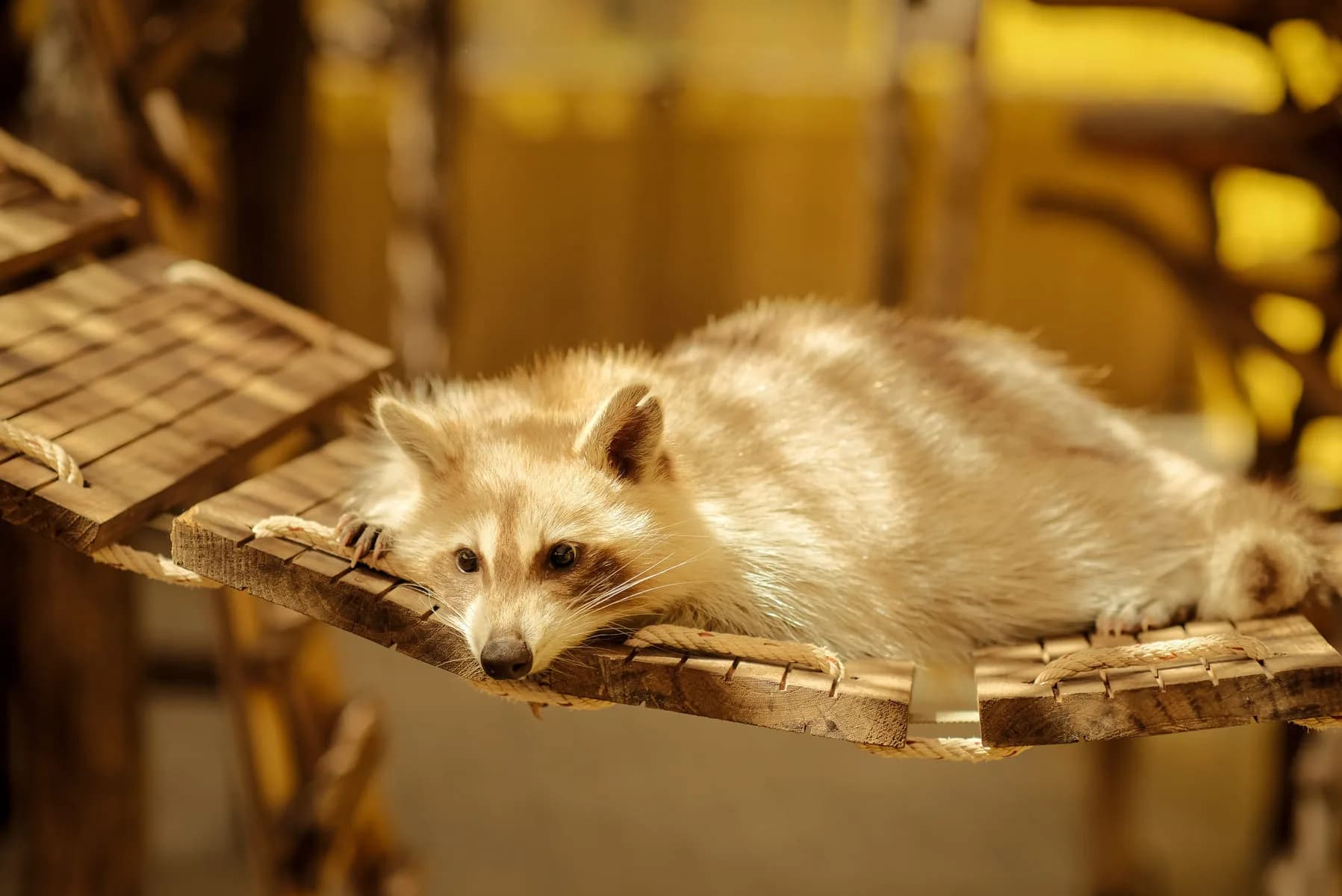
Raccoon
Procyon lotor
North America’s famous masked bandit, with remarkably clever hands and an endlessly curious mind.
- Size
- Body 40–70 cm, tail 20–40 cm, 4–9 kg
- Lifespan
- 2–3 years in the wild, up to 15–20 in care
- Diet
- Omnivore: fruit, nuts, insects, fish, eggs
Origin & range
Raccoons come from North America, from Canada through the United States to Central America. They prefer woodland near water, but adapt easily to farmland and even cities.
What they’re like
Easy to recognise by the black “mask” around the eyes and a tail with four to seven dark rings.
Their front paws are extremely sensitive, almost like hands: raccoons use them to open lids, undo latches and identify objects by touch without looking.
Behaviour
Raccoons are mostly active at night and like to curl up and sleep during the day. They are very smart: studies show they can remember how to solve a puzzle for up to three years.
They often dunk food in water and rub it between their paws before eating. Water makes the skin of their paws even more sensitive, so they can “feel” their food better.
Favourite things
- Sweet fruit and nuts
- Playing with water and handling objects
- Investigating anything new
Did you know?
- The scientific name “lotor” means “washer”, from their habit of rubbing food in water
- Raccoons are not related to bears or cats: they have their own family, Procyonidae
- In German and Japanese they are also called the “washing bear”
When you visit, please
- Hold on to phones, glasses and bags: raccoons love to “borrow” things
- Don’t put fingers through the enclosure
- Only feed food prepared by the farm, when staff say it’s OK
- Keep voices low; don’t shout or bang on the enclosure
- Wash your hands after touching the animals