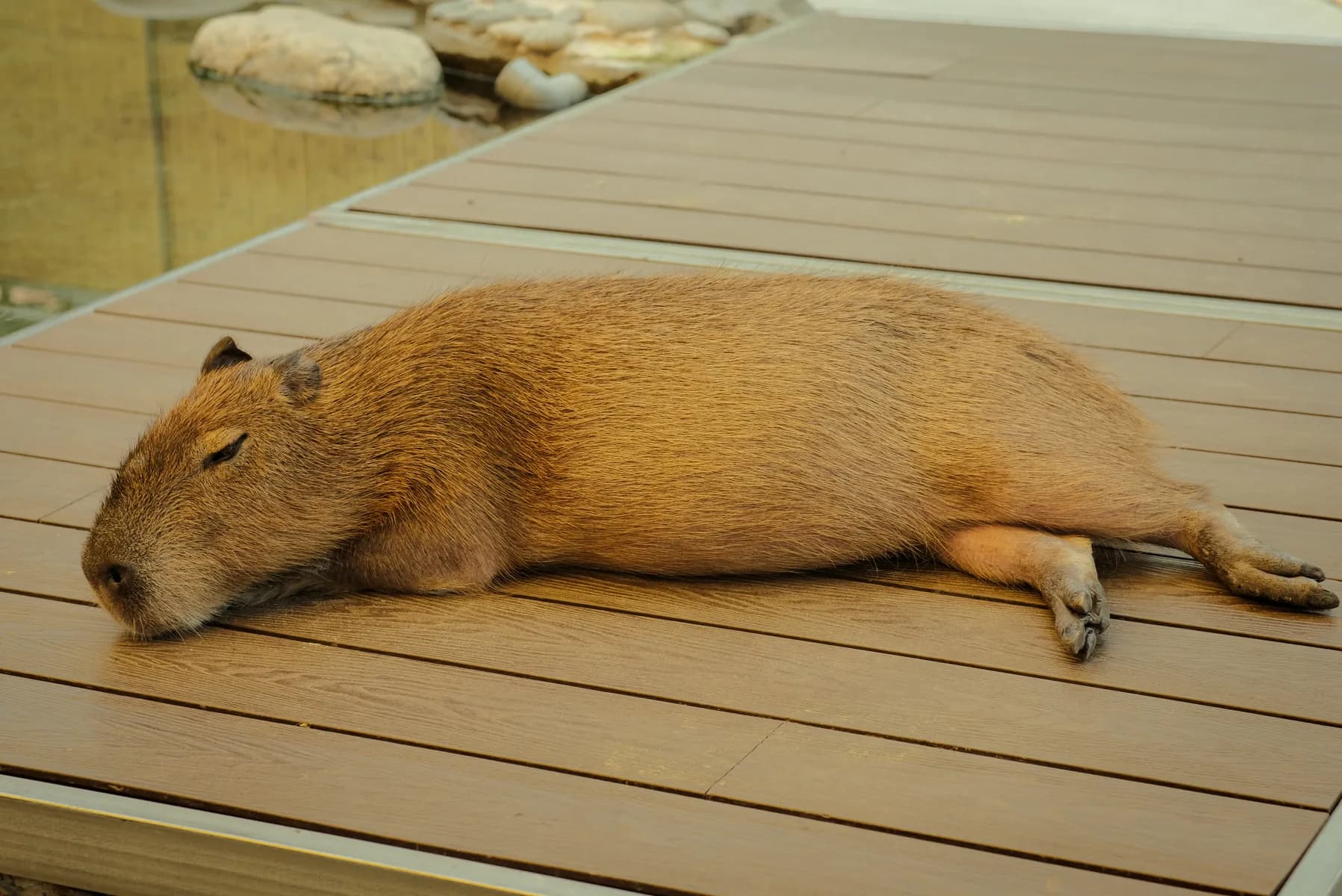
Capybara
Hydrochoerus hydrochaeris
The world’s largest rodent, so famously calm it has become the internet’s favourite “chill” animal.
- Size
- 1–1.3 m long, 35–65 kg
- Lifespan
- 8–10 years, over 12 in care
- Diet
- Grass, water plants, vegetables
Origin & range
Capybaras live wild across South America, from Venezuela and Colombia down to Brazil, Paraguay and northern Argentina. They always stay close to water: riverbanks, lakes, marshes and flooded grasslands.
What they’re like
Their eyes, ears and nostrils sit high on the head, so a capybara can lie almost fully underwater and still see, hear and breathe. Slightly webbed toes make them strong swimmers.
Their short, coarse fur dries quickly. Their front teeth never stop growing and are worn down by grazing every day.
Behaviour
Capybaras live in groups, usually 10 to 20, and are very peaceful. They are most active early in the morning and late in the afternoon, and spend the midday hours soaking or resting.
They talk to each other with whistles, purrs and clicks. When danger appears, the whole group heads for the water and can hold their breath for about five minutes.
Favourite things
- Soaking in cool water
- Grazing on fresh grass and greens
- Sunbathing next to their friends
Did you know?
- Birds, monkeys and even turtles happily sit on a capybara’s back, and it doesn’t mind at all
- Capybaras can doze in the water with just their nose sticking out
- The name comes from the Tupi language of Brazil and means “eater of slender grass”
When you visit, please
- Approach slowly and don’t follow them when they walk away
- Only feed food prepared by the farm, when staff say it’s OK
- Keep voices low; don’t shout or bang on the enclosure
- Wash your hands after touching the animals